
If posting on social media feels like a second job you never applied for, you’re not imagining it. Most business owners pour their best hours into the exact channel that converts the worst — then wonder why they’re exhausted and the sales still aren’t showing up. The good news: there’s another way to grow, and it doesn’t require dancing on a single reel.
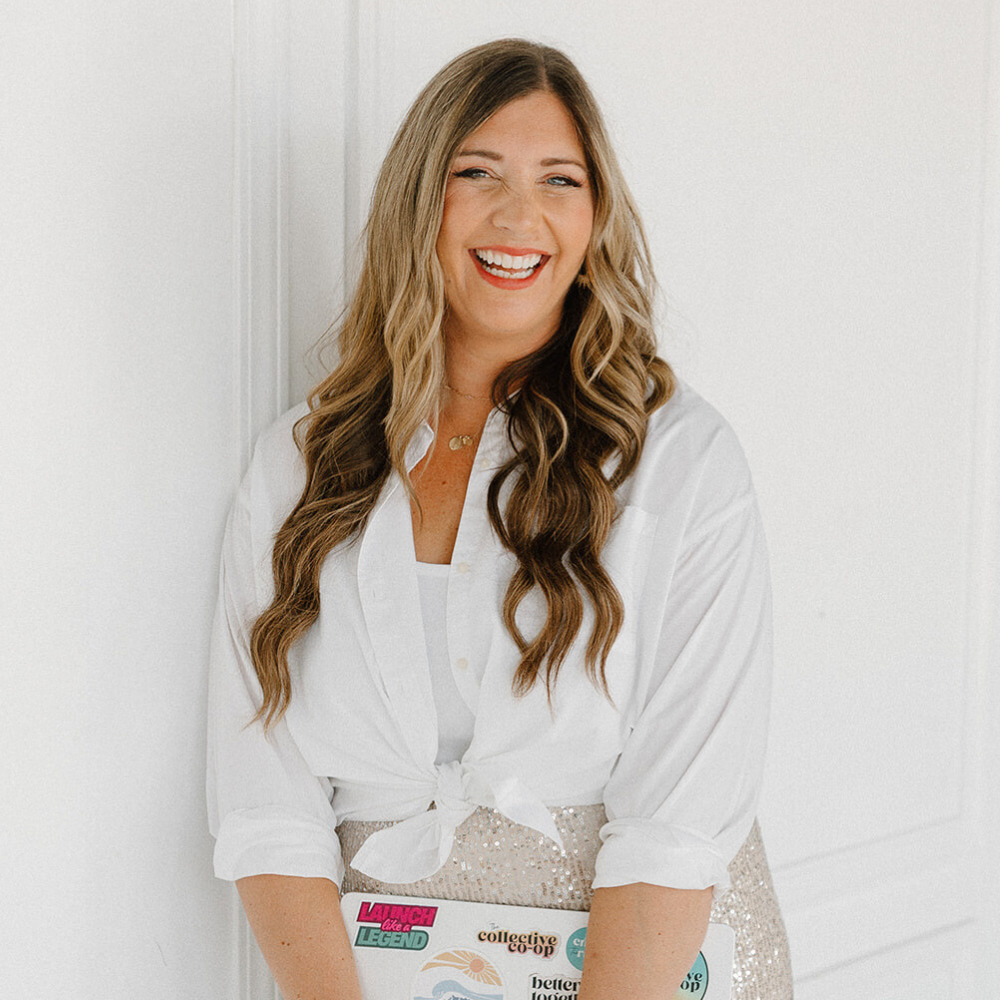
Holly Haynes built a 7-figure business — and eventually retired both herself and her husband — without leaning on daily posting. A former Fortune 500 strategist, she started her company in 2020 while working full-time and raising twin daughters. She calls her approach “anti-social,” and it’s built on one simple truth: social media is the sidecar, not the engine.
Social Media Is the Decoration, Not the Foundation
Holly uses a house analogy that’s hard to forget. A strong business is like a brick house built on a solid foundation. Social media? That’s the curtains and the paint colors. Everyone rushes to decorate first, but the decoration doesn’t hold the house up. The unglamorous back-end work — the part that feels slow — is what sustains you and eventually lets you step away.
That doesn’t mean deleting your accounts. Holly still posts when she feels like it — a family update from the gymnastics parking lot at 8 p.m. But she spends under an hour a week on social, and she’s clear that it isn’t what drives revenue. It’s a nice-to-have, not the growth strategy.
Start by Looking at Your Data
The single most important move Holly recommends is the one almost nobody does: look at your data. Where did your last five sales actually come from? Most people, when they check, find the answer is referrals, a networking event, a podcast interview, or an email — not a viral post. A reel gives you a hit of dopamine and five likes. It rarely gives you a customer.
For Holly, the numbers are stark: 71% of her sales come from email. The rest come mostly from speaking and podcasting — anywhere people can hear her voice and story. Once you know what’s actually converting, you can stop guessing and start doubling down.
Build an Anti-Social Media Home Base You Can Repurpose
The system that replaces the daily scramble starts with what Holly calls a “home base”: one piece of consistent, long-form content that positions you as a leader. It could be a podcast, a blog, a YouTube channel, or a Substack — whatever platform feels easy enough that you’ll actually stay consistent. If you love to talk, record. If you love to write, write.
From there, it’s a hub-and-spoke model. One podcast episode can be repurposed into more than a dozen places — with a bias toward quality over quantity. Every piece points back to an email list, ideally through a lead magnet with a real wow factor (not just another forgettable PDF). Email then does the nurturing and selling over time.
SEO — Including the AI Kind
SEO scares a lot of creative business owners because it sounds technical and slow. But it’s quietly become one of the highest-leverage things you can do — especially now that people ask ChatGPT and Claude for recommendations instead of scrolling Instagram. Holly gets recommended by AI tools roughly 50 times a month, largely by accident, because her website answers real buyer questions: who a product is for, how to use it, why to choose it over an alternative.
Her shortcut for the overwhelmed: log into an AI tool and run an SEO audit of your site. It’ll tell you what you’re known for, whether that matches what you want, and what to fix next. Then create content that answers the three things a buyer needs to know before they purchase.
Redefining What Success Looks Like Without Social Media
None of this works if you’re still measuring success by everyone else’s scoreboard. Holly had to let go of what her neighbors and family thought business “should” look like and define it on her own terms: summers mostly off, eleven countries with her girls, work at 8 p.m. from the gymnastics bleachers if she wants. Counterintuitively, setting firmer boundaries on her time often grows revenue rather than shrinking it — a pattern Andee has seen in her own business too.
So here’s your one anti-social move this week: open your data, find where your sales really came from, and do more of that — pointing everything back to your home base. Because all roads should lead to Rome, and Rome is a foundation you own — not a feed you rent.
Want the full framework? Listen to this episode of She Sells Differently, and grab Holly’s free private podcast, The Antisocial Shift, at hollymariehaynes.com/shift.

Andee Hart is an award-winning sales executive who walked away from traditional success to reinvent how product-based businesses grow. After nearly 20 years in corporate America, she turned a kitchen-counter candle experiment into Hart Design Co, a wholesale brand carried by hundreds of boutiques across North America. That experience became the foundation for She Sells Differently, where Andee is teaching emerging product brand owners to redefine what it means to sell by serving with excellence, growing with strategic purpose, and shining as a light in the marketplace.

